
304 type stainless steel explained for material selection
What 304 type stainless steel is
304 type stainless steel is an austenitic chromium-nickel stainless steel commonly specified as UNS S30400. In purchasing and fabrication language, it is the standard 18/8 stainless grade: enough chromium to form a passive corrosion-resistant surface film, and enough nickel to maintain a tough, ductile austenitic structure at room temperature. It is widely used because it gives a practical balance of corrosion resistance, cleanability, formability, weldability, and availability. The grade name, however, should not be treated as a blanket corrosion guarantee. 304 performs well in many indoor, food-contact, mild chemical, and general atmospheric environments, but it can be unsuitable where chlorides, seawater, stagnant deposits, strong acids, or high-temperature sensitization risks are present.
For more background on alloy selection and surface behavior, see the Metals & Surfaces section.
Composition and standards behind 304
When a drawing, purchase order, or material certificate says 304, the buyer should treat it as a specification-controlled material, not a casual label. ASTM A240/A240M, for example, covers chromium, chromium-nickel, and chromium-manganese-nickel stainless steel plate, sheet, and strip for pressure vessels and general applications, and it requires conformance to specified chemical and mechanical properties. ASTM International describes the scope as including architectural, building, construction, and aesthetic applications as well as pressure-vessel uses. (store.astm.org)
For ASTM A240 flat products, common published summaries from ASSDA and BSSA list 304, UNS S30400, with maximum carbon 0.08%, maximum silicon 1.00%, maximum manganese 2.00%, maximum phosphorus 0.045%, maximum sulfur 0.030%, chromium 18.0-20.0%, and nickel commonly 8.0-10.5%. Other product standards and regional designations may vary slightly, so the material test report should be checked against the exact standard named in the order. (assda.asn.au)
The 18% chromium region is central to 304 performance because chromium supports the passive surface film that gives stainless steel its resistance to ordinary rusting. Nickel is not only a cost element; it helps stabilize the austenitic structure that gives 304 its toughness, ductility, and forming behavior. For that reason, substituting a lower-nickel grade only on price can change forming, corrosion, and service behavior, even when the material still looks like stainless steel.
Properties that drive everyday use
Corrosion resistance
304 resists ordinary atmospheric rusting in many indoor and mild outdoor environments. It is also widely used in food processing because it can be cleaned and resists many organic chemicals and mild inorganic chemicals. ASSDA describes 304 as having excellent corrosion resistance in a wide range of media, while also making clear that it is not appropriate in every application. That distinction matters in specification work: stainless performance depends on the environment, surface condition, crevices, cleaning frequency, temperature, and fabrication quality, not only on the grade name. (assda.asn.au)
Forming, work hardening, and magnetism
304 is usually selected when parts need to be drawn, bent, rolled, or formed without losing toughness. As an austenitic grade, it is not hardened by ordinary heat treatment in the way martensitic stainless steels can be. Instead, it work hardens during deformation. That can be useful for formed components because strength rises with cold work, but it also affects machining forces, springback, and tool wear.
Annealed 304 is often described as non-magnetic, but that shortcut can mislead inspectors and buyers. Cold working can create strain-induced martensite, so formed or machined 304 may show some magnetic response. A magnet test alone is therefore not a reliable way to accept or reject 304. Positive material identification, a mill certificate, and the specified UNS or standard designation are better controls.
Welding and heat exposure
304 is generally weldable by common stainless processes when the filler metal, shielding, cleaning, and heat input are appropriate. The main caution is sensitization, where chromium carbides can form at grain boundaries after exposure to certain temperature ranges, reducing corrosion resistance in aggressive environments. This is one reason 304L is often used for welded fabrications, especially where post-weld heat treatment is not practical.
Heat service also needs precise wording. ASSDA guidance notes that 304 has good oxidation resistance in intermittent service to 870°C and continuous service to 925°C, but continuous use in the 425-860°C range is not recommended if the part will later face room-temperature aqueous corrosion conditions. The same source notes that 304L is more resistant to carbide precipitation, while 304H is aimed at higher-temperature strength. (assda.asn.au)
Where 304 type stainless steel works well
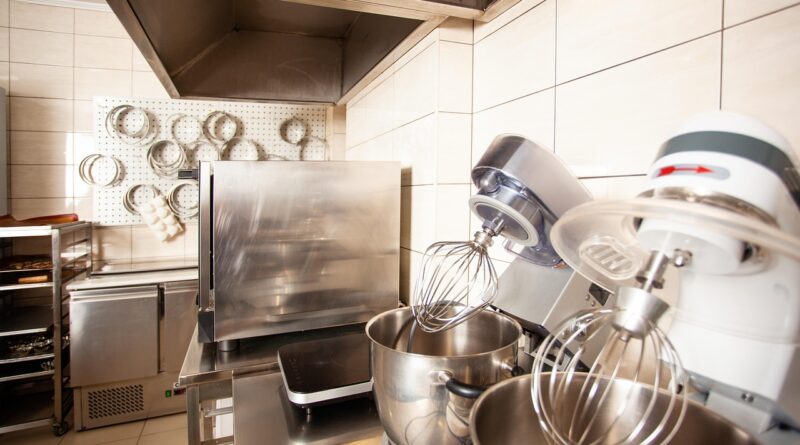
304 is often the economical starting point for stainless selection when the service environment is not highly aggressive. Common uses include kitchen and food-preparation equipment, dairy and beverage equipment, appliance panels, sinks, indoor architectural trim, light structural components, cleanroom fittings, non-marine handrails, tanks for mild products, and general sheet-metal fabrication.
Its value comes from the combination of properties rather than from one outstanding feature. Compared with carbon steel, 304 offers much better resistance to ordinary rusting and does not require a paint coating for many clean indoor environments. Compared with ferritic 430, it usually offers better toughness and formability. Compared with 316, it is usually more available and less costly, but it has lower resistance to chloride pitting and crevice corrosion because it lacks the molybdenum addition used in 316.
Surface finish is part of the material system. A smooth, clean, well-drained surface performs better than a rough, contaminated, or crevice-prone surface of the same grade. Pickling, passivation, proper handling, and avoiding carbon-steel contamination can matter as much as the grade choice for visible architectural or hygienic service. See also: Bolts & Fasteners.
Where 304 is not enough
The most common misapplication is chloride exposure. Chlorides can come from seawater, de-icing salts, bleach residues, brines, pool atmospheres, cleaning chemicals, and evaporating process water. In warm chloride environments, 304 can suffer pitting, crevice corrosion, and chloride stress corrosion cracking. ASSDA notes that 304 is subject to pitting and crevice corrosion in warm chloride environments and may experience stress corrosion cracking when tensile stresses are present above about 50°C. SSINA separately notes that chloride stress corrosion cracking is uncommon for fully immersed stainless steels below 60°C, but evaporation and concentrating mechanisms can create more severe local conditions. (assda.asn.au)
Coastal exposure is a related problem. Tea staining is a brown discoloration associated with surface corrosion, and it is promoted by sea salt deposits, humidity, rough finishes, sheltered surfaces, and poor drainage. ASSDA guidance states that 316, or a grade with equivalent corrosion resistance, should be selected as a minimum within five kilometres of surf exposure, while lower-alloy grades such as 304 and 430 will probably tea stain or may suffer more severe corrosion in marine environments. (assda.asn.au)
Strong acids, reducing acids, acidic chlorides, stagnant deposits, and high-temperature chloride-bearing equipment should not be treated as routine 304 service. The correct alternative may be 316, 317L, duplex stainless, a 6% molybdenum austenitic grade, a nickel alloy, or a non-metallic material, depending on temperature, chemistry, stress, cleaning, and design life. A grade upgrade alone may not solve a crevice, drainage, or cleaning problem.
How 304 compares with nearby grades
| Grade | Main distinction | When it is usually considered | Main caution |
|---|---|---|---|
| 304 | Standard chromium-nickel austenitic stainless steel, UNS S30400 | General fabrication, indoor architectural work, food equipment, mild chemical exposure | Limited resistance to chlorides, seawater, and aggressive crevice conditions |
| 304L | Low-carbon version, commonly maximum 0.030% carbon | Welded fabrications where corrosion after welding is a concern | Do not assume it improves chloride pitting resistance compared with 304 |
| 304H | Higher-carbon version for elevated-temperature strength | High-temperature service where the design code and product form call for it | Not intended where sensitization corrosion is expected |
| 316 | Chromium-nickel stainless with molybdenum addition | More demanding chloride exposure, marine atmospheres, many chemical environments | Still not immune to chloride stress corrosion cracking or poor design |
| 430 | Ferritic chromium stainless without the nickel level of 304 | Decorative, appliance, and lower-cost uses in mild environments | Lower formability and toughness than 304 in many applications |
BSSA explains that the practical difference between 304 and 304L is carbon content: 304 is typically 0.08% carbon maximum, while 304L is 0.030% maximum. It also notes that many modern products are dual certified as 304/304L when the chemistry meets both designations. This is useful, but the certificate still matters because dual certification must be proven, not assumed. (bssa.org.uk)
Specification checklist before buying or approving 304
- Name the exact standard and product form. Plate, sheet, strip, bar, tube, pipe, fastener, and casting requirements are not interchangeable.
- Require the UNS designation. For standard 304, look for UNS S30400 unless another variant is intentionally specified.
- Check the material test report. Confirm chemistry, mechanical properties, heat number, standard edition, and any dual certification.
- Define the surface finish. A rough or contaminated surface can corrode sooner than a smooth and properly cleaned one.
- State welding expectations. If welding is involved, consider 304L, suitable filler metal, heat tint removal, and passivation requirements.
- Describe the environment honestly. Include chlorides, cleaning chemicals, temperature, humidity, stagnation, crevices, and maintenance access.
- Do not specify by magnet test or appearance. Use documents, testing, and clear standards-based language.
The practical conclusion is straightforward: 304 type stainless steel is a strong default for many mild and clean environments, but it is not a generic synonym for corrosion-proof metal. Good specifications pair the grade with surface finish, fabrication controls, cleaning expectations, and a realistic view of the service environment.
Frequently asked questions
Is 304 type stainless steel the same as 18/8 stainless steel?
In many commercial contexts, yes. The term 18/8 refers to the approximate chromium and nickel levels associated with 304 stainless steel. However, 18/8 is an informal description, while 304 or UNS S30400 is a specification designation. For purchasing and inspection, use the standard grade and require documentation.
Is 304 stainless steel food safe?
304 is widely used for food and beverage equipment because it is cleanable and resists many food-processing environments. Suitability still depends on product chemistry, salt level, acidity, cleaning chemicals, weld quality, and surface finish. Highly salted or acidic chloride conditions may require a more resistant grade.
Does 304 stainless steel rust?
304 resists ordinary rusting much better than carbon steel, but it can corrode. Brown staining, pitting, or crevice corrosion can occur if the surface is exposed to chlorides, trapped moisture, carbon-steel contamination, poor drainage, or aggressive cleaners.
Should welded parts use 304 or 304L?
For many welded fabrications, 304L is preferred because its lower carbon content reduces the risk of sensitization-related intergranular corrosion. If the part will face only a very mild environment, standard 304 may still be acceptable, but the decision should be tied to the service environment and applicable code.
When should 316 replace 304?
316 is commonly considered when chlorides, marine atmospheres, salt spray, brines, or more demanding chemical exposure are present. It is not automatically sufficient for every chloride service, but its molybdenum addition gives it better resistance to localized chloride attack than 304 in many applications.


