
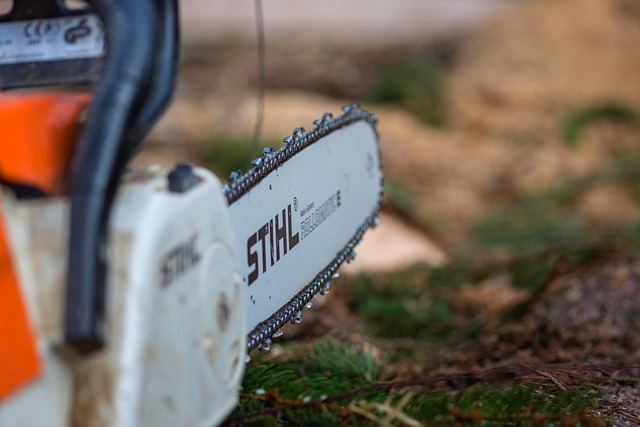
Could The Hand Held Chain Saw Provide Forensic Clues In Mamta Kafle Bhatt’s Case
Hairs Found on Power Saw in Mamta Kafle Bhatt’s Disappearance, Presumed Death
The discovery of hairs on a hand held chain saw linked to Mamta Kafle Bhatt’s disappearance has become a pivotal element in reconstructing the presumed homicide. Forensic experts consider such power tools not only as mechanical implements but also as carriers of microscopic biological evidence that can survive cutting operations. The presence of hair and tissue fragments on metallic blades provides direct physical linkage between the tool and the victim, allowing investigators to infer sequence, timing, and intent. This analysis explores how trace evidence from a chain saw can be scientifically evaluated to support legal proceedings.
Forensic Significance of the Hand Held Chain Saw in the Mamta Kafle Bhatt Investigation
The case revolves around the recovery of a hand held chain saw suspected to have been used in dismembering remains associated with Mamta Kafle Bhatt. In forensic reconstruction, such instruments are often examined for embedded biological traces that withstand cleaning or environmental exposure.
Overview of the Case Context
Mamta Kafle Bhatt’s disappearance drew attention when investigators recovered a portable cutting tool bearing visible residues. The hand held chain saw became central to forensic interpretation because its design allows accumulation of trace material within its sprocket area and chain grooves. These residues, including hair shafts or epithelial tissue, serve as biological markers that can link a suspect’s possession of the tool to an act of violence.
The Role of Power Tools in Forensic Investigations
Portable power tools like chain saws or portable band saws frequently retain micro-debris after use. Forensic laboratories employ optical microscopy, DNA profiling, and residue mapping to identify such materials. Tool-associated evidence often carries high probative value because it connects mechanical action with human biological matter at a molecular level.
Trace Evidence and Biological Material on Cutting Instruments
Chain saws generate frictional heat and shear forces that fragment tissue but may still preserve root bulbs or mitochondrial DNA within hair samples. Even limited fragments can yield genetic information if properly collected and preserved.
Trace Evidence and Biological Material on Cutting Instruments
In any investigation involving power tools, proper handling determines evidentiary reliability. The integrity of microscopic residues depends on immediate collection using sterile techniques and adherence to strict custody protocols.
Collection and Preservation Techniques for Hair and Tissue Samples
Investigators typically swab metallic blades with moistened sterile gauze before disassembling components for further inspection. Each sample is sealed individually to prevent cross-contamination. Laboratories follow ISO 18385 standards for minimizing human DNA contamination during collection and packaging.
Microscopic and DNA Analysis of Hairs Found on the Power Saw
Hair morphology under comparison microscopy distinguishes human from animal origin by analyzing medullary patterns and pigment distribution. When nuclear DNA is absent due to degradation from mechanical heat, mitochondrial sequencing provides lineage identification that can associate remains with maternal relatives.
Interpretation Challenges in Hair Evidence
Partial or damaged hair strands limit statistical certainty; therefore, analysts report probability ratios rather than absolute matches. Hair findings gain interpretive strength only when corroborated by other physical indicators such as blood spatter directionality or consistent tool marks on bone surfaces.
Tool Mark and Mechanical Trace Examination
Tool mark analysis complements biological testing by revealing how an instrument interacted with material substrates. Examiners assess both macroscopic cut geometry and microscopic striation patterns unique to each blade assembly.
Identifying Unique Tool Characteristics on Biological or Material Substrates
Every chain saw develops distinctive wear marks along its cutting teeth through usage-induced abrasion. Comparison microscopy enables side-by-side evaluation between questioned cuts on bone or wood samples and test cuts made with the seized tool to verify congruence.
Reconstruction of Possible Tool Usage Scenarios
Cut depth, angle orientation, and kerf width help reconstruct operator movement during dismemberment events. Tissue elasticity indicators further suggest whether cuts occurred perimortem—when circulation was active—or postmortem after rigidity set in.
The Forensic Implications of Portable Band Saws Compared to Hand Held Chain Saws
While both instruments serve similar mechanical functions, their forensic signatures differ significantly due to motion dynamics and residue retention mechanisms.
Distinguishing Characteristics Between These Tools in Forensic Contexts
A portable band saw employs continuous linear motion producing smoother kerf walls, whereas a hand held chain saw’s oscillating chain yields irregular serrations with higher potential for embedding biological debris within link recesses. Torque variations influence how much organic residue adheres during operation.
Analytical Techniques Specific to Each Tool Type
Scanning electron microscopy (SEM) assists in mapping micro-residues across blade surfaces, identifying metal particulates or lubricant films specific to manufacturer design. Elemental analysis through energy-dispersive X-ray spectroscopy can differentiate between oil-based residues characteristic of chain lubrication systems versus dry-cut deposits from band saws.
Integrating Multi-Disciplinary Forensic Findings into a Coherent Investigative Framework
Complex cases demand synthesis across multiple specialties so that interpretations remain consistent and scientifically defensible.
Collaboration Between Forensic Pathologists, Tool Mark Examiners, and DNA Analysts
Cross-disciplinary coordination allows alignment between autopsy observations—such as wound morphology—and mechanical trace data derived from laboratory tests. Shared terminology reduces misinterpretation when describing serrated injuries or cut-edge deformation features.
Evaluating Evidentiary Weight within the Broader Investigative Narrative
Power tool evidence gains significance when contextualized alongside digital timelines or witness accounts indicating possession or disposal attempts. Experts must weigh contamination risks against probative value before integrating results into prosecutorial arguments.
Ethical and Procedural Considerations in Handling Sensitive Evidence
High-profile investigations require heightened transparency without compromising scientific neutrality. Analysts must resist speculative conclusions even under public scrutiny.
Maintaining Objectivity During High-Profile Investigations
Peer review by independent laboratories mitigates confirmation bias inherent in emotionally charged cases. Documentation should reflect procedural fidelity rather than investigative expectations.
Legal Admissibility Standards for Tool-Related Forensic Evidence
Courts assess scientific reliability under Daubert or Frye frameworks by evaluating method validation, calibration records, and reproducibility metrics. Comprehensive logs detailing sampling conditions support admissibility during expert testimony.
FAQ
Q1: Why is hair evidence from power tools considered reliable?
A: When collected under sterile conditions with documented custody, hair retains mitochondrial DNA that remains stable even after mechanical stress, offering strong associative potential between victim and instrument.
Q2: How do investigators distinguish between perimortem and postmortem tool use?
A: They analyze tissue reactions such as hemorrhage presence; active bleeding suggests perimortem use while absence indicates postmortem manipulation.
Q3: What makes a hand held chain saw more evidentially significant than other cutting tools?
A: Its high-speed rotational motion traps micro-debris within lubricated crevices where organic material resists environmental degradation longer than on smooth blades.
Q4: Can lubricant residues interfere with DNA testing?
A: Yes, petroleum-based lubricants may inhibit amplification enzymes; therefore pre-cleaning protocols using solvent extraction are applied before genetic assays.
Q5: Are SEM analyses admissible in court?
A: Yes, provided laboratories demonstrate calibration traceability under ISO/IEC 17025 accreditation ensuring analytical precision recognized by judicial standards.


