
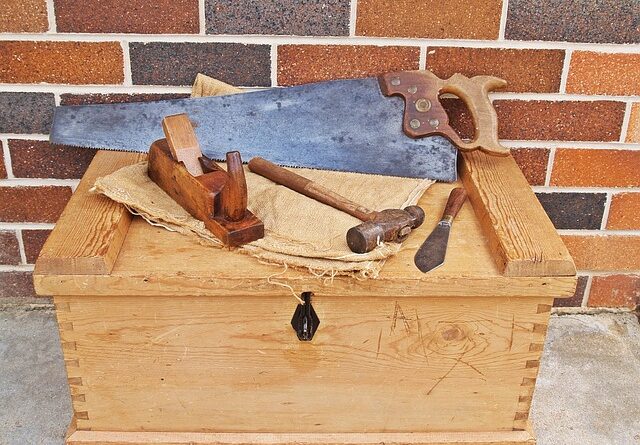
Could The Hand Held Saw Evidence Redefine The Mamta Kafle Bhatt Case
Hairs Found on Handheld Power Saw in Mamta Kafle Bhatt’s Disappearance, Presumed Death
The forensic investigation into the disappearance and presumed death of Mamta Kafle Bhatt gained renewed momentum when hairs were discovered on a hand held saw recovered from a suspect’s property. This single piece of evidence, though seemingly minor, carries significant forensic implications. Its analysis could clarify whether the saw was used in dismemberment or concealment efforts and potentially link biological traces to the missing individual. The case underscores how advances in trace evidence recovery and DNA sequencing can reshape investigative outcomes years after an incident occurred.
Forensic Relevance of the Handheld Saw Evidence
The significance of the hand held saw lies not only in its physical presence but in what microscopic and molecular traces might reveal about its use and connection to the victim.
The Context of the Mamta Kafle Bhatt Case
Mamta Kafle Bhatt’s case began as a missing person report that quickly escalated into a suspected homicide investigation after inconsistencies emerged in witness statements and forensic findings. Authorities established a detailed timeline marking each phase of evidence collection, from initial search operations to laboratory testing. Over time, investigators identified multiple items possibly related to her disappearance, but none carried as much potential evidentiary weight as the handheld power saw later found during a secondary search. Physical evidence like this often dictates investigative direction because it can directly associate an object with both suspect and victim through trace material.
Discovery and Handling of the Handheld Saw
The hand held saw was reportedly recovered during a targeted property search following digital intelligence leads suggesting disposal activities near an industrial area. Upon discovery, officers followed strict chain-of-custody procedures consistent with ISO/IEC 17025 standards for forensic laboratories to prevent contamination or degradation. Each transfer was logged, photographed, and sealed before being sent for analysis. Initial expectations centered on identifying tool marks or biological residues that could indicate recent use involving organic material—an approach aligned with standard forensic protocols for tool-related evidence.
Hair Evidence Analysis on the Handheld Saw
Hair strands found adhered to metallic teeth of the saw introduced a new dimension to the investigation, raising questions about their origin, integrity, and probative value.
Forensic Examination Techniques Applied to Hair Samples
Forensic scientists first employed stereomicroscopy to assess morphological features such as medulla pattern, pigmentation, and root condition. When sufficient root tissue remained, mitochondrial DNA (mtDNA) profiling followed using next-generation sequencing methods suitable for degraded samples. Analysts also compared observed characteristics against reference hair from both human and animal sources to exclude environmental contamination. Degraded samples presented challenges typical in aged exhibits: fragmented DNA strands and oxidative damage requiring advanced amplification techniques to obtain viable sequences.
Interpretation of Hair Findings in a Criminal Context
Morphological comparison revealed similarities between recovered hairs and known samples from Mamta Kafle Bhatt’s personal belongings; however, mtDNA results provided only partial concordance due to sequence degradation. In forensic reporting terms, such results are described as “consistent with but not exclusive of” a match—a phrasing intended to convey statistical caution rather than certainty. Without nuclear DNA or accompanying tissue fragments, hair-based conclusions remain supportive yet non-definitive unless corroborated by other biological materials or contextual evidence.
Tool Mark and Biological Trace Correlation
Linking mechanical tool marks with biological residues provides critical insight into how instruments were used relative to human remains or associated materials.
Assessing Biological Residue on Cutting Tools
Investigators applied luminol screening followed by confirmatory tests for hemoglobin derivatives using high-sensitivity immunoassays. Trace epithelial cells were targeted through micro-swabbing techniques optimized for metallic surfaces common in power tools. Environmental exposure—particularly moisture and cleaning agents—had partially degraded residues but not eliminated them entirely. Analytical chemists cross-referenced these findings with corrosion patterns suggesting post-use washing attempts.
Linking Tool Usage to Victim Interaction
Tool mark specialists examined cut surfaces from objects retrieved at secondary sites where possible dismemberment was suspected. Comparative microscopy revealed striation patterns consistent with those produced by the seized hand held saw model. Reconstruction modeling suggested sequential cutting consistent with disarticulation rather than incidental contact with inert materials. When combined with trace residue placement along specific blade regions, these observations reinforced hypotheses regarding direct involvement rather than coincidental possession.
Evidentiary Weight in Legal Interpretation
Courts evaluate scientific evidence based on reliability, relevance, and procedural integrity rather than mere presence of biological material.
Evaluating Admissibility Under Forensic Standards
Under evidentiary frameworks modeled after Daubert criteria used internationally, trace biological evidence must demonstrate scientifically validated methodology and proper chain-of-custody documentation before admission. Expert witnesses must articulate analytical limitations transparently while linking conclusions logically to data obtained under controlled conditions. Judges often weigh probative value against potential prejudice if interpretive uncertainty could mislead jurors regarding statistical strength.
Impact on Investigative Direction and Legal Strategy
The introduction of new forensic insights can shift prosecutorial emphasis toward or away from physical linkage theories depending on analytical robustness. Defense strategies typically scrutinize contamination risk or sample degradation timelines as grounds for reasonable doubt. In cold cases like this one, reanalysis using modern methods may justify reopening investigations or reclassifying prior findings if previously inconclusive results gain new clarity through enhanced sensitivity techniques.
Advancements in Forensic Technology Relevant to the Case
Technological progress continues to redefine what constitutes recoverable evidence from aged metallic tools once considered barren of genetic material.
Emerging DNA Recovery Techniques from Metallic Tools
Recent studies highlight improved recovery rates using micro-extraction buffers capable of isolating trace nucleic acids embedded within metal microgrooves even after prolonged exposure. Next-generation sequencing allows identification from low-template mixtures previously unreadable by conventional STR profiling. Such advancements have enabled breakthroughs where decades-old weapons yielded usable profiles linking suspects long after original investigations had stalled.
Integrating Multidisciplinary Forensic Approaches
Modern forensic interpretation increasingly relies on collaboration among geneticists, materials scientists, chemists, and crime reconstruction experts who collectively evaluate mechanical wear patterns alongside molecular data. This multidisciplinary integration produces more comprehensive reconstructions by correlating chemical residues with physical tool dynamics rather than treating each discipline’s output in isolation. As laboratories adopt standardized interdepartmental workflows under ISO accreditation frameworks, reliability across complex evidentiary assessments continues improving—enhancing both investigative confidence and judicial acceptance.
FAQ
Q1: Why is hair evidence important if it cannot confirm identity absolutely?
A: Hair provides associative information that can connect individuals or objects even when nuclear DNA is absent; its value increases when supported by contextual or corroborating traces.
Q2: What makes mitochondrial DNA useful in old cases?
A: Mitochondrial DNA resists degradation better than nuclear DNA because it exists in multiple copies per cell, allowing partial identification when other tissues fail.
Q3: How do investigators maintain integrity when handling metallic tools?
A: They use sterile gloves, tamper-proof packaging, sequential documentation logs, and controlled storage conditions minimizing corrosion or contamination risk.
Q4: Can cleaning eliminate all forensic traces from a hand held saw?
A: Cleaning may reduce detectable residues but rarely removes all microscopic material; modern assays can detect remnants even after extensive washing attempts.
Q5: How might new technology affect unresolved cases like Mamta Kafle Bhatt’s?
A: Advanced sequencing and trace recovery methods could extract usable profiles from archived exhibits once deemed unsuitable for testing, potentially altering legal outcomes years later.


