
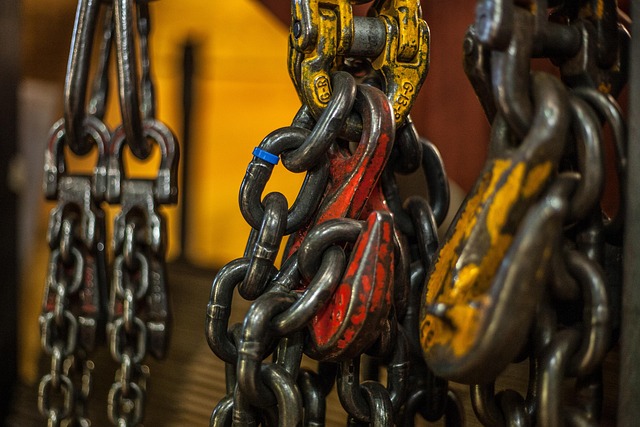
Are Eye Bolts the Safest Choice for Hoisting Heavy Loads Today
The Do’s and Don’ts of Hoisting a Load with Eye Bolts
Eye bolts remain one of the most trusted components in lifting and rigging operations. Their simplicity hides a complex engineering balance between geometry, metallurgy, and load dynamics. When used correctly, they provide safe and repeatable performance for hoisting heavy machinery or structural assemblies. However, misuse—such as side loading or inadequate thread engagement—can lead to failure. This article explores how eye bolts function in modern lifting systems, compares them with newer alternatives, and outlines best practices for installation and inspection.
The Role of Eye Bolts in Modern Hoisting Applications
Eye bolts act as the interface between a load and its lifting medium. In industrial practice, they are chosen not only for their strength but also for their adaptability across different lifting configurations.
The Function and Design Principles of Eye Bolts
Eye bolts serve as critical lifting points in hoisting systems. Their circular eye allows secure attachment of ropes, cables, or chains during vertical or angular lifts. The design distributes tension evenly along the shank to reduce bending stress. Material selection—typically forged carbon steel or alloy steel—determines both strength and fatigue resistance. Thread integrity is vital; poorly cut threads can cause premature stripping under load.
Common Types of Eye Bolts Used in Industrial Settings
Different applications require specific bolt geometries. Shoulder eye bolts include a machined shoulder that supports angular lifts up to 45 degrees without overstressing the shank. Plain pattern eye bolts lack this shoulder and should only be used for true vertical lifts where no side force exists. Swivel eye bolts incorporate a rotating ring that allows rotation under load, minimizing torsional stress during alignment or repositioning.
Evaluating the Safety Performance of Eye Bolts Under Heavy Loads
The safety performance of an eye bolt depends on both its rated capacity and how it is installed in the structure. Even high-grade materials can fail if subjected to misaligned loads or poor anchoring.
Load Ratings and Safety Factors in Eye Bolt Applications
Manufacturers specify Safe Working Load (SWL) values based on controlled testing conditions. These ratings assume proper installation into materials with adequate tensile strength. Overloading beyond SWL can cause plastic deformation or fracture. Safety factors—typically between 4:1 and 6:1 depending on standard—are applied to account for shock loading, vibration, or environmental degradation such as corrosion.
Failure Modes and Risk Assessment in Lifting Operations
Common failure modes include thread stripping due to insufficient engagement depth, bending from side loading, and fatigue cracking caused by cyclic stresses. Misalignment increases shear forces that exceed design limits even at moderate loads. Regular inspection routines are essential: operators should look for elongation around the eye, surface cracks near the shoulder, or rust pitting along threads that could compromise integrity.
Comparing Eye Bolts with Alternative Lifting Hardware
While eye bolts remain popular, modern lifting technology offers alternatives like swivel hoist rings that address some of their limitations.
Advantages of Using Eye Bolts Over Other Fastening Devices
Eye bolts are easy to install using standard tools and compatible with most shackles or hooks found in rigging kits. When installed into rated materials such as cast steel or reinforced plate, they provide high tensile strength at relatively low cost. For repetitive tasks like engine removal or equipment assembly, they offer efficiency without requiring specialized fixtures.
Limitations Compared to Modern Swivel Hoist Rings and Lifting Points
Despite their advantages, traditional eye bolts have restricted angular movement once loaded. Any deviation from straight-line pull introduces side stresses that reduce capacity significantly—sometimes by more than half at 45 degrees. Unlike swivel hoist rings that rotate freely under tension, static eye designs cannot realign automatically during lift adjustments, making them less suitable for dynamic or multi-directional operations.
Technological Advancements Enhancing Eye Bolt Safety and Performance
Recent advances in material science and digital monitoring have improved both reliability and traceability in lifting hardware manufacturing.
Innovations in Materials and Manufacturing Processes
Heat-treated alloy steels now deliver superior yield strength while maintaining ductility under impact loading. Precision forging ensures consistent grain flow through the shank and eye radius, improving fatigue life by distributing stress uniformly. Protective coatings such as zinc plating or epoxy-based finishes extend service life in marine environments where salt exposure accelerates corrosion.
Integration of Smart Monitoring Systems in Lifting Equipment
Emerging smart systems embed miniature sensors within lifting assemblies to record strain data during use. Wireless transmission allows operators to monitor loads in real time through handheld devices or control panels. Data analytics then predict maintenance intervals based on cumulative stress cycles rather than arbitrary time schedules—a shift toward condition-based maintenance aligned with ISO 12482 principles on crane monitoring systems.
Best Practices for Ensuring Safe Use of Eye Bolts in Heavy-Duty Applications
Proper installation is as important as material quality when it comes to safe lifting operations.
Installation Guidelines for Optimal Load Distribution
The axis of an eye bolt must align precisely with the direction of applied force to prevent bending moments on the shank. Washers or spacers may be used to maintain flush contact against uneven surfaces but must not interfere with full thread engagement. For tapped holes, at least 90% thread depth engagement should be achieved; for through-bolted setups, nuts must be fully seated against bearing surfaces without gaps.
Maintenance, Inspection, and Replacement Protocols
Before each lift cycle, operators should perform visual checks for cracks around the shoulder fillet or corrosion along threads. Torque verification ensures that seating remains secure after repeated use where vibration might loosen fittings. Any bolt showing elongation beyond manufacturer limits—or visible distortion—should be retired immediately rather than repaired or reused.
Assessing Whether Eye Bolts Remain a Reliable Choice Today
Even amid rapid innovation in lifting hardware design, conventional eye bolts continue to hold relevance when applied within their operational boundaries.
Industry Standards Governing Safe Use of Eye Bolts
Compliance with ASME B30.26 defines dimensional tolerances and proof-load requirements across U.S.-manufactured lifting hardware. OSHA regulations further mandate periodic inspection intervals based on usage frequency and environmental exposure levels. ISO 3266 provides equivalent international guidelines ensuring mechanical integrity through standardized testing procedures such as tensile proof tests at 2× rated working load.
The Evolving Role of Eye Bolts Amid Emerging Lifting Technologies
Advanced swivel systems dominate markets requiring full rotational freedom under load—such as robotic assembly lines—but traditional forged eye bolts remain cost-effective solutions for static vertical lifts common in construction yards or ship maintenance docks. Continuous improvements in metallurgy sustain their competitiveness by reducing weight-to-strength ratios while maintaining safety margins demanded by modern risk assessments.
FAQ
Q1: What is the maximum safe angle when using a shoulder eye bolt?
A: Generally up to 45 degrees from vertical; beyond that angle capacity drops sharply due to increased side loading forces.
Q2: How often should industrial eye bolts be inspected?
A: Visual checks before each use are recommended; formal inspections should occur quarterly under normal service conditions per ASME B30 guidelines.
Q3: Can stainless steel eye bolts handle dynamic loads?
A: Yes, but only if properly rated; stainless grades resist corrosion well but may have lower yield strength compared with heat-treated alloy versions.
Q4: Why do some installations require washers beneath the shoulder?
A: Washers help maintain even contact on rough surfaces but must not reduce thread engagement depth below manufacturer requirements.
Q5: Are swivel hoist rings safer than traditional eye bolts?
A: They offer greater flexibility under multi-directional loads but come at higher cost; choice depends on whether rotation during lift is necessary or not.


