
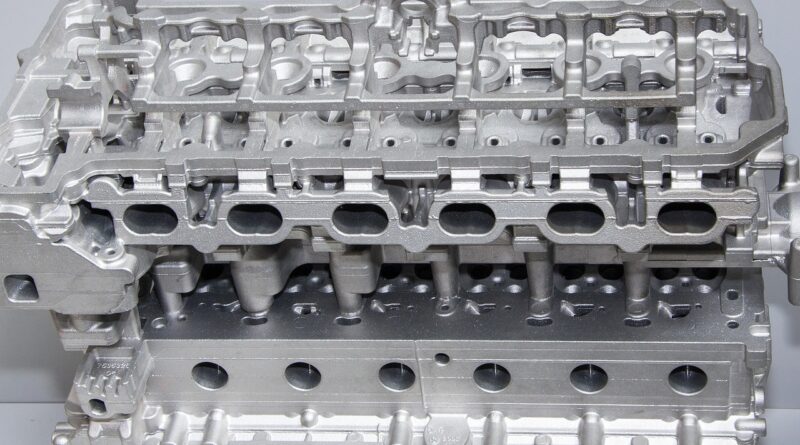
Aluminum alloy 6061 T6 explained for properties, machining and finishes
What aluminum alloy 6061 T6 means
Aluminum alloy 6061 T6 is a heat-treated 6xxx-series aluminum used when a part needs a practical balance of strength, machinability, corrosion resistance, weldability and surface finish options. The alloy number 6061 refers to an aluminum-magnesium-silicon composition with small additions such as copper and chromium. The T6 temper means the material has been solution heat treated and artificially aged, giving it higher strength than annealed 6061-O or naturally aged 6061-T4.
For designers, buyers and fabricators, 6061-T6 is often a sensible default for brackets, frames, machined plates, extrusions and general structural components. It is not, however, the automatic choice for every formed, welded, marine or highly decorative surface application.

The useful way to evaluate 6061-T6 is to look beyond the alloy keyword. Product form, governing specification, thickness or section size, surface requirement and post-fabrication process all affect performance. More material-selection articles can be found in the Metals & Surfaces section.
Core 6061-T6 properties
Published property tables from sources such as the Aluminum Association, ASTM product specifications, ASM International, NIST thermal-property datasets and MatWeb-style material summaries generally describe the same broad profile for 6061-T6: medium-to-high strength among general-purpose aluminum alloys, low density, good thermal conductivity and good machinability. Certified values still depend on product form and applicable specification, so the figures below should be treated as common room-temperature reference values, not purchase guarantees.
| Property | Common reference value for 6061-T6 | Practical meaning |
|---|---|---|
| Density | About 2.70 g/cm³ | Roughly one-third the density of carbon steel, useful for weight-sensitive parts. |
| Ultimate tensile strength | About 310 MPa, or 45 ksi | Good general structural strength for aluminum, though below 7075-T6. |
| Yield strength | About 276 MPa, or 40 ksi | A common design reference for permanent deformation limits before applying code factors. |
| Elastic modulus | About 69 GPa | Similar to many aluminum alloys; stiffness is much lower than steel even when strength is adequate. |
| Elongation | Often around 12–17%, depending on section and test basis | Moderate ductility, but tight bending is harder in T6 than in softer tempers. |
| Brinell hardness | Often around 95 HB | Machines well and resists light wear better than soft aluminum, but is not a bearing alloy by default. |
| Thermal conductivity | About 167 W/m·K at room temperature | Useful for heat-spreading parts, housings and fixtures where aluminum conductivity matters. |
A common mistake is to compare 6061-T6 by tensile strength alone. In many finished parts, stiffness, deflection, fatigue details, weld heat-affected zones, coating thickness and galvanic contact with other metals influence service performance before the catalog tensile number becomes the limiting factor.
Composition and standards to check before buying
6061 belongs to the aluminum-magnesium-silicon family. Typical registered composition limits include silicon around 0.40–0.80%, magnesium around 0.80–1.20%, copper around 0.15–0.40% and chromium around 0.04–0.35%, with iron, manganese, zinc, titanium and other elements controlled within smaller limits and aluminum making up the remainder. This chemistry helps explain why 6061 can be precipitation hardened, anodized, welded and machined reasonably well without being optimized too narrowly for only one operation.
For procurement, alloy and temper are only the starting point. Standards such as ASTM B221 for extruded bars, rods, wire, profiles and tubes; ASTM B209/B209M for sheet and plate; ASTM B211/B211M for rolled or cold-finished bar, rod and wire; and ASTM B308/B308M for 6061-T6 standard structural profiles exist because product form changes dimensional tolerances, test requirements and minimum mechanical properties. ASTM B221 also distinguishes general extruded tubes from seamless pressure or fluid-carrying tube specifications, which matters when a tube will carry pressure rather than simply act as a shape.
A useful purchase line should therefore state more than 6061-T6. It should include product form, standard, dimensions, temper, finish requirement, certification requirement and any special inspection. For critical parts, request a mill test report, and do not substitute 6061-T651, 6061-T6511 or 6061-T4 without confirming whether stress relief, straightness, machinability, forming behavior or final strength requirements will change.
Performance in fabrication and service
Machining
6061-T6 is widely chosen for CNC parts, fixtures, housings, prototypes and tooling plates because it cuts cleanly, holds dimensions well in normal practice and is available in many forms. It is not as free-machining as leaded or specially modified aluminum grades, but it is predictable. Sharp tools, good chip evacuation and suitable coolant or lubrication help reduce built-up edge and improve surface finish.
Forming
The T6 temper increases strength but reduces bendability compared with annealed or naturally aged material. If a part requires tight bends, deep forming or complex sheet fabrication, 5052-H32, 3003 or 6061 in a softer temper may be more forgiving. If 6061-T6 must be bent, larger inside bend radii, correct grain-direction planning and trial bends are safer than assuming it will behave like soft sheet aluminum.
Welding
6061 is weldable by common aluminum welding processes, but welding locally changes the heat-treated microstructure. The heat-affected zone beside the weld can lose T6 strength, and the finished assembly may not retain the same design allowables as the original base metal. Filler selection, joint design, procedure qualification and any post-weld heat treatment should be decided by the relevant welding code or engineering requirement rather than by alloy name alone.
Corrosion and temperature limits
6061-T6 has good atmospheric corrosion resistance for many indoor, industrial and outdoor uses, especially when cleaned and finished appropriately. In chloride-rich or continuously wet environments, design details become important: avoid water traps, isolate dissimilar metals, specify coatings where needed and account for crevice corrosion. At elevated service temperatures, age-hardened aluminum alloys can lose strength over time, so high-temperature exposure should be checked against the applicable design data instead of relying on room-temperature values.
Surface finishing choices for 6061-T6
Because this site covers metals and surfaces, the finish behavior of 6061-T6 deserves as much attention as the strength table. The alloy can be left mill-finished for non-decorative parts, mechanically brushed, bead blasted, chemically treated, anodized, hardcoat anodized, painted or powder coated. Each option affects dimensions, appearance and durability. See also: Bolts & Fasteners.
- Clear or dyed anodizing: Common for machined parts, brackets and consumer-facing components. 6061 anodizes well for many functional and moderately decorative uses, but color uniformity can vary with lot, grain flow, weld zones and surface preparation.
- Hardcoat anodizing: Adds a thicker, harder oxide for wear and abrasion resistance. Designers should allow for coating buildup and possible dimensional change on precision bores, threads and sliding fits.
- Chemical conversion coating: Often used when electrical conductivity, paint adhesion or corrosion protection is needed without the thickness of anodizing. It is common on electrical housings and aerospace-style fabrication, subject to the specified chemistry and regulations.
- Paint or powder coating: Useful for outdoor color, UV resistance and extra corrosion protection. Proper cleaning, deoxidizing or conversion pretreatment is usually more important than the topcoat brand.
- Mechanical finishes: Brushing, polishing and blasting can improve appearance, but they also reveal scratches, extrusion lines or weld discoloration if surface preparation is inconsistent.
For decorative extrusions where appearance is the primary requirement, 6063 is often preferred because it extrudes and anodizes attractively. For functional machined parts where strength and availability matter more than perfect architectural brightness, 6061-T6 remains a strong candidate.
How 6061-T6 compares with common aluminum alternatives
Alloy selection is usually a tradeoff rather than a ranking. The comparison below uses representative property levels and common industry practice to show where 6061-T6 fits.
| Alloy and temper | Strength profile | Where it may be better than 6061-T6 | Main caution |
|---|---|---|---|
| 6061-T6 | About 276 MPa yield, 310 MPa tensile | Balanced machining, strength, corrosion resistance, welding and availability. | Reduced strength in weld zones and limited tight forming in T6. |
| 6063-T5 or T6 | Lower strength than 6061-T6 in many forms | Architectural extrusions, attractive anodized surfaces and complex profiles. | Not usually the first choice for higher-load structural parts. |
| 5052-H32 | Moderate strength, not heat treatable | Sheet forming, marine sheet work and better bendability. | Less suitable for high-strength machined structural parts. |
| 7075-T6 | Much higher strength, often above 500 MPa yield in common references | High-load aerospace-style parts where weight and strength dominate. | More expensive, less weld-friendly and more corrosion-sensitive without correct protection. |
| 6082-T6 | Often comparable to or slightly stronger than 6061-T6 depending on form | Structural extrusions and plate in markets where 6082 is more available. | Availability and standards vary by region. |
The practical conclusion is straightforward: choose 6061-T6 when a balanced, widely available engineering aluminum is needed. Choose a different alloy or temper when one requirement dominates, such as very tight sheet forming, very high static strength, premium architectural anodizing or confirmed marine exposure.
Practical selection checklist
Before specifying or ordering 6061-T6, run through a short checklist. It can prevent problems that later appear as cracking, coating mismatch, unexpected distortion or failed inspection.
- Confirm the product form and standard, not just the alloy-temper designation.
- Check whether the design is controlled by strength, stiffness, fatigue, deflection, wear or appearance.
- Allow for lower strength near welds unless a qualified post-weld process restores the required properties.
- Use appropriate bend radii or choose a softer temper or different alloy for severe forming.
- Specify the surface finish early, especially for anodized, hardcoat or painted parts with tight tolerances.
- Consider galvanic isolation when 6061 contacts stainless steel, carbon steel, copper alloys or wet fasteners.
- Request certification for safety-critical, structural or regulated applications.
In most general engineering uses, 6061-T6 earns its popularity because it is predictable, available and versatile. Its limitations are also predictable, which is why clear specification and process planning matter more than treating it as a universal aluminum grade.
Frequently asked questions
Is 6061-T6 stronger than regular aluminum?
It is stronger than commercially pure aluminum and much stronger than annealed 6061-O. The T6 heat treatment gives 6061 a significant increase in yield and tensile strength through precipitation hardening. However, it is not the strongest aluminum alloy; 7075-T6 is much stronger in many reference tables.
Can 6061-T6 be anodized?
Yes. 6061-T6 is commonly anodized for functional and decorative purposes. Clear, dyed and hardcoat anodizing are all possible, but final color and brightness depend on surface preparation, alloy lot, prior processing, weld areas and anodizing controls.
Is 6061-T6 good for outdoor use?
It is suitable for many outdoor parts when the design avoids trapped moisture and galvanic couples. For chloride-heavy marine environments or long-term wet service, protective finishing and careful detailing become more important. In some sheet applications, 5052 may be preferred for corrosion resistance and formability.
What is the difference between 6061-T6 and 6061-T651?
Both are solution heat treated and artificially aged, but T651 includes stress relief by stretching after solution heat treatment. T651 is often chosen for plate or products where reduced residual stress and improved machining stability are important. Always confirm the governing product specification before substitution.
Can 6061-T6 be welded without losing strength?
It can be welded, but the weld area and heat-affected zone usually do not retain the original T6 strength. If the structure depends on T6 properties, the engineer should account for reduced weld-zone strength or specify an approved post-weld heat treatment and inspection plan.


